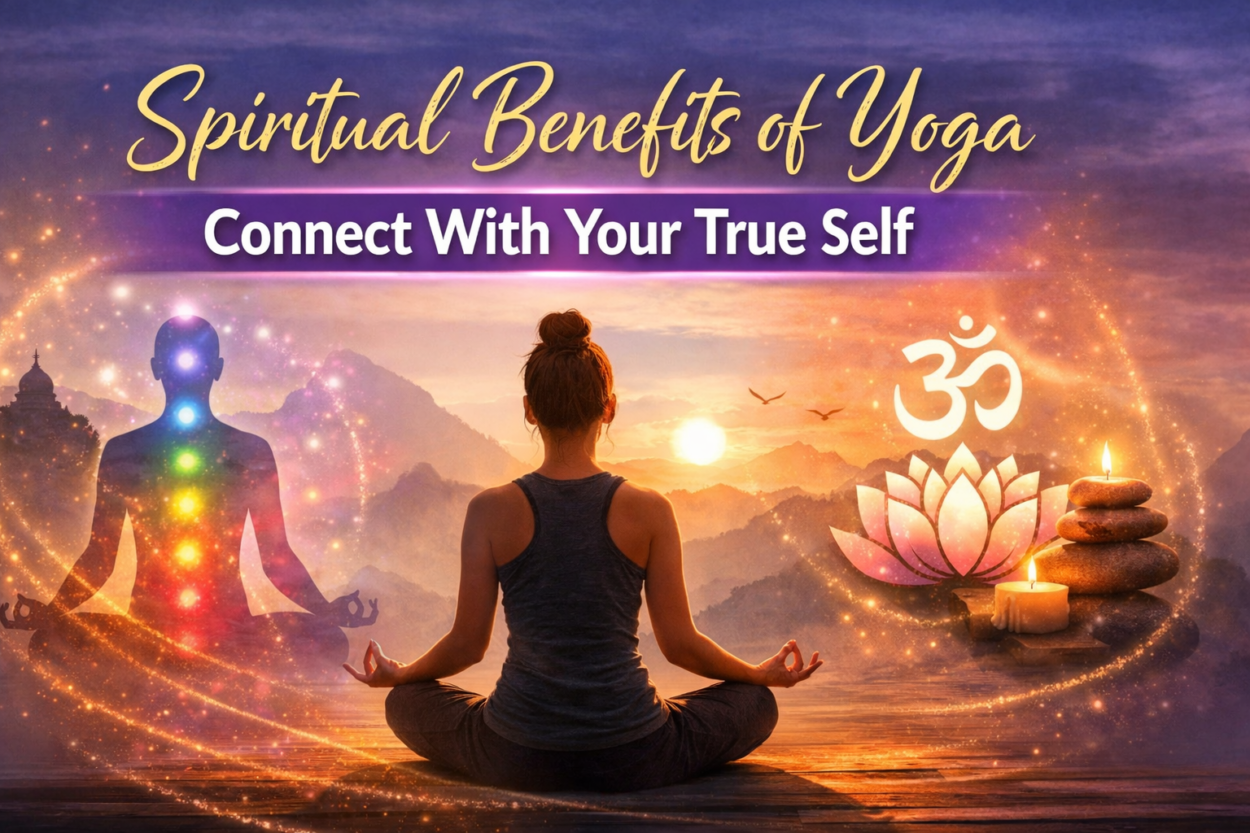
Yoga is often seen as a way to stay fit, flexible and calm. But its deeper purpose goes far beyond physical movement. At its heart, yoga is a path toward understanding yourself, calming the mind and living with greater awareness. For many people today, yoga becomes a bridge between daily life and inner clarity.
This guide explains the spiritual benefits of yoga in a clear and grounded way. This blog is for beginners, regular practitioners, wellness seekers and anyone curious about the deeper side of yoga without complicated ideas or heavy philosophy.
What Makes Yoga More Than Physical Exercise
Yoga did not begin as a workout. Its roots go back thousands of years, where it was practiced as a system for understanding life, the mind and human nature. The physical postures or asanas, are only one small part of a much larger framework.
At its core, yoga helps you become more aware of your thoughts, actions and inner patterns. It teaches how to observe instead of react. Over time, this awareness creates clarity, calmness and a stronger sense of purpose.
Unlike exercise routines that focus only on strength or weight loss, yoga works on the body, mind and inner awareness together.
The Deeper Purpose of Yoga
The deeper purpose of yoga is inner balance. This balance shows up in many ways:
- A calmer response to stress
- Clearer thinking
- Emotional steadiness
- A sense of meaning beyond daily tasks
Yoga does not ask you to believe in a specific religion. It invites you to observe your inner world and understand how your thoughts and actions can shape your life.
The Eight Limbs of Yoga and Everyday Life
Traditional yoga describes eight interconnected aspects that guide a balanced life. These are not rules but practical tools.
1. Yamas – How We Relate to Others
These include kindness, honesty, non-harming and moderation. Practicing them helps improve relationships and builds trust.
2. Niyamas – How We Relate to Ourselves
These focus on self-care, self-discipline, contentment and reflection. Simple habits like gratitude or daily reflection fall here.
3. Asana – Physical Postures
Postures keep the body strong and flexible. They also help release stored tension, making it easier to sit calmly and focus.
4. Pranayama – Breath Control
Breathing techniques calm the nervous system and improve focus. Slow & mindful breathing can reduce anxiety and mental fatigue.
5. Pratyahara – Turning Inward
This step helps reduce distraction from external noise and sensory overload, allowing attention to move inward.
6. Dharana – Concentration
Training the mind to stay with one point, such as the breath or a sound, strengthens focus and patience.
7. Dhyana – Meditation
This is a natural flow of awareness without effort. With practice, it brings deep mental stillness.
8. Samadhi – Inner Wholeness
This represents deep peace and unity, where the sense of separation fades.
How Yoga Supports Inner Growth
Yoga works quietly. You may not notice change in one session, but over time, small shifts appear.
- You react less and respond more
- You feel steadier during stress
- You become more aware of your thoughts
- You feel connected to yourself and others
This growth is personal and gradual. There is no comparison or competition involved.
The Role of Breath and Meditation
Breathing connects the body and mind. When breathing is shallow, the mind feels rushed. When breathing slows, the mind follows.
Simple practices like slow nasal breathing or short moments of stillness can:
- Lower stress levels
- Improve focus
- Support emotional balance
Meditation does not require silence or perfection. Even a few minutes of quiet observation each day builds mental clarity.
Yoga and Inner Awareness
As practice deepens, many people notice a shift in how they see themselves. Instead of reacting instantly, they pause. This pause creates space for choice.
Self-awareness helps with:
- Managing emotions
- Understanding habits
- Making thoughtful decisions
This awareness naturally leads to personal growth without force or pressure.
Ethical Living Through Yoga
Yoga encourages kindness, honesty and responsibility in daily life. These values are not rules but reminders to live with care.
Simple examples include:
- Speaking truthfully but gently
- Choosing actions that do not harm others
- Being mindful of consumption and habits
Living this way often brings peace and stronger relationships.
Yoga Across Traditions
Yoga has roots in ancient Indian philosophy, but its principles appear across cultures. Many spiritual paths value stillness, compassion and self-awareness.
Modern yoga adapts these ideas in a practical way. It allows people of all backgrounds to benefit without needing to follow a specific belief system.
Science and Spiritual Well-Being
Modern research supports many benefits long linked to yoga practice, such as:
- Reduced stress hormones
- Improved emotional regulation
- Better sleep quality
- Enhanced focus and mood
These findings show how inner practices influence physical and mental health together.
Simple Daily Practices to Begin
You do not need long sessions or advanced poses. Start small:
- Sit quietly for five minutes each morning
- Take five slow breaths before responding in stressful moments
- Stretch gently and observe how your body feels
- Reflect on one positive action each day
Consistency matters more than intensity.
A Simple Weekly Starter Plan
Week 1: Focus on breathing and short stretches
Week 2: Add five minutes of quiet sitting
Week 3: Observe thoughts without judging
Week 4: Bring awareness into daily tasks
These steps create a steady and natural rhythm.
Clearing Common Misunderstandings
Yoga is not about flexibility or perfection.
It does not require religious belief.
It is not about escaping life but engaging with it more clearly.
Yoga meets you where you are and grows with you.
Final Thoughts
The spiritual benefits of yoga unfold slowly and naturally. Through simple practices, awareness grows. With awareness comes calm, clarity and a deeper connection to life itself.
Yoga does not ask you to change who you are. It helps you understand yourself better. Over the time, this understanding shapes how you think, act and live—bringing balance that extends far beyond the mat.
Also Read : Father of Yoga: Ancient History That Changed the World
Leave a Comment